
Learn About Paving with Kolbe Blocks
Tips and Notes for Successful Paving
Whether you’re working on a residential driveway, commercial parking lot, or an industrial site, proper preparation and technique are essential for achieving a long-lasting, attractive surface. Kolbe Blocks offers these valuable tips to guide you through each stage of the paving process:
Preparing the Area
- Clear the Site
Remove any vegetation, debris, or old paving materials. Ensure the area is level and clean. - Excavation
Dig to the required depth—typically 150-200mm for residential projects and deeper for commercial or industrial applications. - Base Layer
Lay a solid base of crushed stone or gravel, compacting it thoroughly to create a stable foundation. - Edge Restraints
Install edge restraints to prevent shifting and ensure the longevity of the paved surface.
Laying the Paving
- Sand Bedding
Spread a 30-50mm layer of coarse sand over the compacted base. Level the sand to create an even surface. - Placing the Pavers
Begin laying Kolbe Blocks from one corner, keeping pavers tightly aligned. Use a rubber mallet to secure each paver in place. - Cutting Pavers
For edges and corners, cut Kolbe Blocks as needed using a masonry saw or a chisel and hammer. - Joint Filling
Sweep fine sand into the joints to lock the pavers in place, then compact the surface again. Place a rubber mat between the compactor and the pavers to avoid damage.
Additional Tips
- Slope for Drainage
Ensure a slight slope to allow water drainage, preventing pooling and potential damage. - Regular Maintenance
Keep the area clean, and free of weeds, and refill joint sand as needed to maintain stability. - Consider Professional Help
For large or complex projects, hiring professional paving contractors can help ensure quality results.
By following these steps with Kolbe Blocks, you’ll achieve a high-quality paving job that enhances the functionality and appearance of any space.
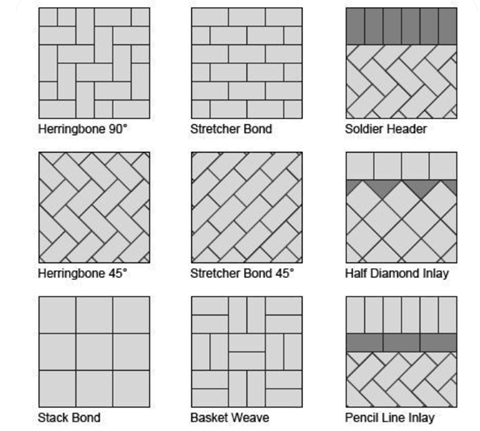
Paving Laying Patterns
(Add a section showcasing different paving patterns to inspire layout options.)
Common Paving Issues & Solutions
Efflorescence
Efflorescence is a white residue that may appear on concrete or clay pavers. This occurs when water-soluble salts migrate to the surface and react with carbon dioxide, forming calcium carbonate. It can show up immediately after installation or later and generally fades within 3-6 months.
Efflorescence does not affect the strength or durability of the concrete, though it can dull the appearance. While it often resolves naturally, there are ways to speed up the process:
- Scrubbing with a stiff brush and water
- Power Washing (caution: excessive pressure may damage pavers)
- Efflorescence Cleaners designed for concrete products
- Muriatic Acid Solution (dilute 12:1 with water and use protective gear)
Black Efflorescence
Also known as “desert varnish” or “black attack,” black efflorescence can cause dark, patchy stains on pavers. This phenomenon is usually permanent and occurs sporadically. Though harmless, it may impact appearance and durability.


Avoiding Paving Problems
- Subgrade Preparation
Poor earthworks can lead to instability and sinking over time. - Compaction
Insufficient compaction can result in sagging, which may cause water pooling. - Drainage
A lack of adequate drainage can damage pavers over time. - Attention to Detail
Minor issues such as cement stains or poor alignment can impact the final look and performance.